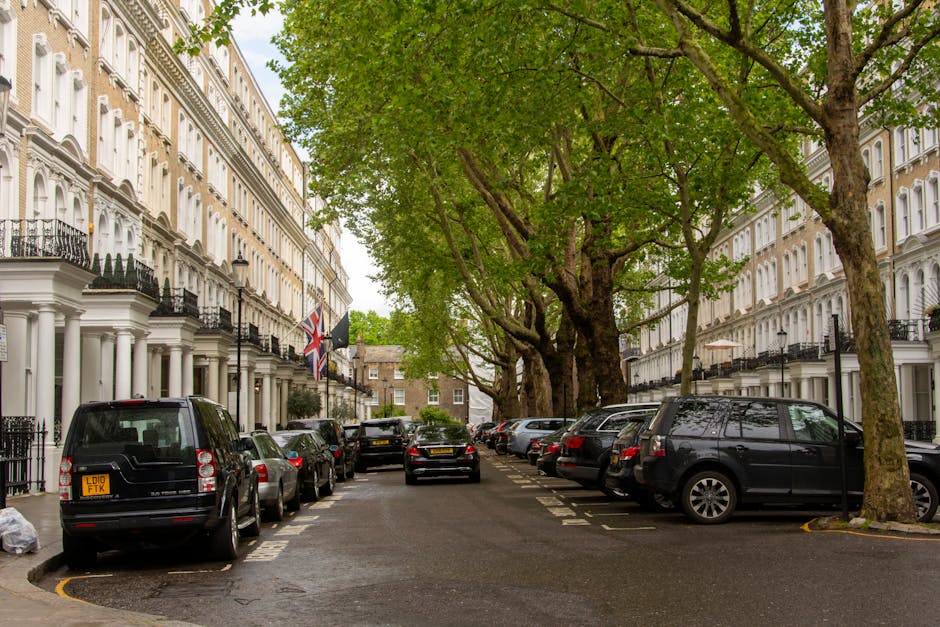
Parking Problems on Vauxhall Crescent? Permit Solutions
Posted on 18/06/2026
If you are trying to plan a move, delivery, or bulky item collection and keep getting stuck on parking, you are not alone. Parking Problems on Vauxhall Crescent? Permit Solutions is a very real concern for anyone trying to load or unload safely in a busy London street. Tight road space, permit restrictions, nearby traffic, and the simple fact that a van needs room to work can turn a straightforward job into a stressful one pretty quickly.
The good news? With the right permit solution and a bit of forward planning, parking does not have to derail your move. In this guide, we will walk through how permit-based parking works, why it matters, who needs it, common mistakes, and the best way to avoid last-minute chaos. If you are organising a move in the area, you may also find it useful to read our guide to a smoother house move and the advice on avoiding hidden fees in removal quotes.

Contents
- Why Parking Problems on Vauxhall Crescent? Permit Solutions Matters
- How Parking Problems on Vauxhall Crescent? Permit Solutions Works
- Key Benefits and Practical Advantages
- Who This Is For and When It Makes Sense
- Step-by-Step Guidance
- Expert Tips for Better Results
- Common Mistakes to Avoid
- Tools, Resources and Recommendations
- Law, Compliance, Standards, or Best Practice
- Options, Methods, or Comparison Table
- Case Study or Real-World Example
- Practical Checklist
- Conclusion
- Frequently Asked Questions
Why Parking Problems on Vauxhall Crescent? Permit Solutions Matters
Parking is not just an inconvenience during a move. In a street like Vauxhall Crescent, it can affect timing, safety, cost, and even whether the job is possible in one go. A van parked too far away means more carrying, more time, and more risk of something being knocked, scratched, or dropped. That is especially relevant if you are moving furniture, boxed belongings, a piano, or heavy appliances.
For residents, landlords, tenants, students, and office teams alike, parking is often the part that gets underestimated. People focus on packing the boxes, then realise at 7:30 a.m. that there is nowhere sensible for the vehicle to stop. That is when the stress spikes. And honestly, it is usually avoidable.
Permit solutions matter because they help create a proper working space. That means the vehicle can park legally or with the right permissions, the unloading area is clearer, and the move feels much less like a juggling act. It is not glamorous, but it makes a real difference.
Expert summary: If access is tight, parking permission is not a side issue; it is part of the move plan. Sorting it early saves time, protects belongings, and reduces the chance of a messy handball from the street.
How Parking Problems on Vauxhall Crescent? Permit Solutions Works
In simple terms, a permit solution is a way of making sure a vehicle can stop or park for a set purpose without causing unnecessary disruption. Depending on the situation, that may mean a temporary parking arrangement, a loading bay approach, a suspension, or a permit linked to a residential or commercial move.
Every local setup is slightly different, so the exact process can vary. That is why a good plan starts with checking what kind of access exists outside the property: is there double yellow line restrictions, controlled parking, limited loading time, a narrow road, or a shared entrance? These details matter more than people expect.
For many moves, the process works best like this:
- Assess the street and the property access.
- Decide what size vehicle needs to stop there.
- Check whether loading is possible without a permit or whether permission is needed.
- Apply or arrange the right parking solution in advance.
- Confirm timings so the vehicle arrives within the allowed window.
- Keep the team informed if anything changes on the day.
In practical terms, the goal is to reduce friction. If you have ever watched a driver circle the block while people stand on the pavement with a sofa and a concerned expression, you will know why this matters. Not ideal. Not fun. Very avoidable.
If you are planning a move with awkward access, services such as a man with a van in Vauxhall or a suitably sized removal van can be far easier to manage when parking is sorted before arrival.
Key Benefits and Practical Advantages
Permit-based parking solutions are not just about avoiding fines. They solve a chain of problems that can otherwise affect the whole moving day.
- Shorter carrying distance: Less time on foot between property and vehicle means less strain and less chance of damage.
- Safer handling: Heavy or awkward items are easier to move when the vehicle is nearby.
- Better timing: The move runs more predictably when the driver is not hunting for a legal space.
- Less disruption to neighbours: Clear planning reduces the odds of blocking driveways or creating avoidable conflict.
- Reduced risk of penalties: Parking without the right permission can create avoidable headaches.
- More professional feel: Whether it is a home move or a business relocation, organised access gives a calmer impression.
There is also a quiet benefit that gets missed: people tend to pack and load more carefully when they are not rushing. A calmer setting supports better decisions. You notice corners, door frames, and fragile items more clearly. Funny how that works.
For extra move-day efficiency, it can help to combine parking planning with smart packing advice from pack effectively for your house move and practical decluttering tips from our clutter-clearing guide.
Who This Is For and When It Makes Sense
This kind of planning is useful for anyone moving in or around Vauxhall Crescent, but it is especially sensible in a few common situations.
Home movers
If you are moving flats or houses and the street access is limited, a permit or parking arrangement may be the difference between a tidy load-out and a long, awkward carry through parked cars and foot traffic.
Students
Student moves often happen quickly, sometimes with little notice. Small jobs can still be surprisingly difficult if the van cannot stop close to the entrance. If that sounds familiar, student removals in Vauxhall can be easier to coordinate when parking is planned early.
Flat and apartment residents
High-density streets and shared entrances usually mean less tolerance for guesswork. A permit solution helps avoid awkward unloading in busy traffic.
Office and commercial movers
Office moves often involve more items than people expect: monitors, filing, chairs, printers, plant pots, and the random cabinet no one remembers ordering. Parking near the door saves time and keeps the move on schedule. For that, office removals in Vauxhall are much smoother when access is pre-arranged.
Single-item and bulky-item collection
If you are arranging a wardrobe, appliance, or large sofa collection, parking is still a core part of the job. One item can still require a full stop, safe lifting room, and a short route to the vehicle. If that is your situation, the article on bulky item collection in Vauxhall is worth a look.
Step-by-Step Guidance
If you want the simplest possible route, follow this order. It works well for most domestic and light commercial moves.
- Check the property access early. Look at the road width, kerb space, and whether the front entrance is easy to reach with a van. Take a quick photo if needed.
- List the items being moved. A few boxes are one thing; a bed, mattress, sofa, freezer, or piano changes the access needs completely.
- Match the vehicle to the job. Smaller vehicles can be easier to place, but not always practical. Larger jobs may need a proper removal van or a team used to tight access.
- Confirm the parking requirement. If stopping outside is restricted, determine whether a permit, loading allowance, or timed parking solution is needed.
- Build in a buffer. Do not set everything to the minute. Allow extra time for the first stop, the walk from vehicle to property, and any unexpected delay.
- Keep neighbours and building management informed. A quick heads-up can prevent complaints and reduce tension on the day.
- Prepare the path inside the property. Clear hallways, protect surfaces, and remove trip hazards. If the vehicle is close, you will still appreciate a clean route inside.
- Reconfirm everything the day before. Parking plans can be derailed by a temporary restriction, a local event, or a last-minute change. Double-check. Honestly, it is worth the five minutes.
If you are dealing with furniture, the advice in furniture removals in Vauxhall pairs well with a parking plan, because large items are where access problems become obvious very quickly.
Expert Tips for Better Results
Here is the practical stuff that tends to make a move feel smoother, based on what usually goes wrong rather than what looks good on paper.
- Measure the route, not just the room. People often measure the sofa and forget the doorway, stair bend, or kerbside turn. The route matters.
- Use early morning where possible. Streets are often calmer earlier in the day, and that can make parking easier. Not always, but often enough to plan around.
- Keep heavy items near the exit. If parking is limited, reduce the time spent carrying by staging large items close to the front door.
- Protect shared surfaces. In blocks of flats, a good move protects lifts, hallways, and entry points. It keeps the day civil.
- Have one person on parking duty. A single calm point of contact prevents mixed messages. Too many voices on the pavement can get messy.
- Stay flexible if the road changes. Temporary roadworks, refuse collection, or nearby deliveries can change the whole picture. You do not need a perfect plan; you need a workable one.
For heavier or awkward items, a little specialist help can be worth it. Our heavy lifting advice is useful, and if the item is a piano, you will want to read about the professional advantage of piano transport before trying to wing it. Pianos and bad parking are not a charming mix.

Common Mistakes to Avoid
Most parking issues come from a few repeated mistakes. Once you know them, they are easy enough to sidestep.
- Leaving parking until the morning of the move. This is the big one. It turns planning into panic.
- Assuming a van can "just stop for a minute". In busy or restricted areas, a minute can still be a problem.
- Choosing the wrong vehicle size. Too small and you need multiple trips; too large and you may struggle to stop legally or safely.
- Forgetting building access rules. Some blocks have entry windows, management requirements, or lift booking issues. Parking is only one part of the equation.
- Underestimating loading time. People often think packing is the hard part. Sometimes unloading from a poor parking position is harder.
- Not protecting the route. A clear path inside helps, especially if the vehicle is close and everyone is moving quickly.
A small mistake can snowball fast. One missed permit, one blocked bay, one extra trip. Suddenly the whole schedule feels wobbly. Been there? Most people have, at least once.
If hidden costs worry you as much as parking does, the article on avoiding hidden fees in Vauxhall removal quotes is a useful companion read.
Tools, Resources and Recommendations
You do not need a drawer full of fancy gear to manage parking well. A few straightforward tools and habits go a long way.
- Phone camera: Take photos of the street, frontage, and any parking signs so you can review the setup later.
- Simple moving checklist: Note the items, timings, access points, and who is responsible for what.
- Markers or labels: If boxes are being moved quickly from van to property, clear labelling prevents extra back-and-forth.
- Protective materials: Blankets, wrapping, and covers matter when the loading area is tight and quick manoeuvres are needed.
- Storage planning: If parking problems mean your move has to be split into stages, short-term storage can be a sensible pressure valve. See storage options in Vauxhall.
Useful prep also comes down to packing discipline. If your move involves boxes, practical packing guidance at packing and boxes in Vauxhall can help keep the loading process efficient.
Law, Compliance, Standards, or Best Practice
Parking on a London street is not something to treat casually. While the exact rules depend on the location and the type of restriction in place, the safest approach is to assume that stopping, loading, and waiting all need to be considered carefully. If a permit, dispensation, or suspension is required, it should be arranged in advance rather than guessed on the day.
Best practice is simple: do not block access, do not assume loading exemption applies automatically, and do not treat restricted parking as "probably fine for a few minutes". Local enforcement can be active, and enforcement does not usually care that the sofa was bigger than expected. Which, to be fair, is annoying but predictable.
For businesses and professional movers, good practice also includes clear communication, safe handling, and respect for shared spaces. That lines up with the broader approach described in the site's health and safety policy and insurance and safety information.
If you are arranging a larger move or using removal support, it is sensible to choose a provider that works transparently and keeps customers informed. That is part of what people expect from a trustworthy move service, alongside clear terms and fair handling.
Options, Methods, or Comparison Table
There is no single parking solution that fits every move. The right choice depends on the street, the size of the vehicle, and how long the loading will take. This comparison should help.
| Option | Best for | Pros | Limitations |
|---|---|---|---|
| Standard legal parking space | Short jobs with light access needs | Simple, low-friction, usually easy to manage | May be too far from the property |
| Temporary permit or arranged permission | House moves, flat moves, bulky collections | Closer vehicle access, easier loading, less carrying | Needs advance planning and correct timing |
| Loading-only approach | Quick drop-offs or collections | Efficient when the loading window is practical | Not suitable for slow or complex moves |
| Split move with storage | Complex access or phased relocation | Reduces pressure on the day, flexible scheduling | May add another step to the process |
For many local moves, a permit-based arrangement is the sweet spot. It gives enough control to make the day manageable without overcomplicating things. That said, if the street is especially tight, a smaller vehicle or a staged move can be smarter than forcing a bigger van into a bad spot.
Case Study or Real-World Example
Picture a typical weekday move from a Vauxhall Crescent flat. The tenant has a sofa, mattress, several boxes, a washing machine, and a few awkward items from the kitchen. At first glance, it sounds fairly ordinary. Then the parking reality kicks in: the closest free space is a long walk away, and the street already has a mix of resident cars and passing traffic.
In this kind of situation, the move becomes much easier when parking is treated as part of the plan rather than an afterthought. The team checks the access in advance, confirms the loading approach, and times arrival so the van can work close to the property. The sofa goes out without extra dragging. The mattress is not carried around parked cars. The appliance move is controlled rather than rushed.
That single change often saves more time than people expect. More importantly, it reduces stress. You hear less of that tense "quick, before someone comes round the corner" energy, and more of a calm, methodical rhythm. Small thing. Big difference.
If the move involves a flat or shared building, it can also help to review flat-specific logistics, like those covered in flat removals in Vauxhall. If the job is bigger, the wider guidance on house removals in Vauxhall may be useful too.
Practical Checklist
Use this checklist to keep things straightforward. It is simple on purpose.
- Confirm the moving date and time window.
- Check the street outside the property for parking restrictions.
- Decide whether a permit or arranged parking solution is needed.
- Match the vehicle size to the items being moved.
- Tell neighbours or building management if access may be affected.
- Prepare the entrance, hallways, and stair route inside.
- Label boxes clearly and keep essentials separate.
- Protect furniture and fragile items before loading begins.
- Allow extra time for loading and unexpected delays.
- Recheck the plan the day before and again on the morning if needed.
Key takeaway: The best parking plan is the one that reduces carrying distance, avoids guesswork, and leaves you enough breathing room to move properly. That is really the whole game.
Conclusion
Parking Problems on Vauxhall Crescent? Permit Solutions are not just a technical side note. They are often the difference between a smooth, controlled move and a day full of avoidable stress. If you sort the vehicle access early, confirm the right parking arrangement, and keep the move plan realistic, you will make the whole process easier on everyone involved.
That applies whether you are moving a one-bed flat, helping a student settle in, clearing out a family home, or handling a larger office job. The principle is the same: parking shapes the pace of the move. Get it right, and everything else tends to fall into place more naturally.
Get a free quote today and see how much you can save.
And if you are still staring at the street and wondering how the van is meant to fit, take a breath. There is usually a workable solution. It just needs a calm look, a bit of planning, and the willingness to do things in the right order.